
Siquijor Fiestas 2026 – Complete Festival & Fiesta Guide
Fiestas are an essential part of the Philippine calendar and are celebrated in every municipality and many barangays across the country to honor each town’s patron saint. In the Philippines, a fiesta is more than just a celebration – it reflects culture, history, and deeply rooted religious faith.
With origins dating back to the Spanish colonial period, Philippine fiestas remain a vibrant expression of tradition and continue to shape social and religious life today. For travelers, they offer a unique opportunity to experience local culture and the joyful spirit of the people up close.
On Siquijor, fiestas and festivals take place throughout the entire year. Each one has its own traditions, meaning, and activities. Many Siquijor fiesta dates follow a fixed annual schedule, making them a highlight for travelers who want to experience the island in an authentic way.
In this guide, you’ll discover everything about Siquijor’s fiestas – including the biggest festivals, their cultural meaning, helpful tips for visitors, and a complete Siquijor fiesta calendar to help you experience these celebrations at the right time.
Experience Siquijor Fiestas – Culture, Tradition & Community
The fiestas in Siquijor are among the most vibrant and authentic experiences you can have on the island. Imagine streets filled with people, colorful decorations, rhythmic drums, traditional dances, endless food, and a feeling that the entire town is celebrating together – that’s what Siquijor fiestas are all about.
Siquijor is divided into 6 municipalities with a total of 134 barangays, and almost every one of them celebrates its own fiesta. The municipal fiestas are much larger, as all barangays come together to celebrate, which is why they are often referred to as Siquijor festivals. Barangay fiestas, on the other hand, are smaller, charming street celebrations with fewer activities for visitors.
While fiestas showcase the island’s vibrant community life, Siquijor’s mystical side comes alive during the Healing Festival in Siquijor, offering a completely different and deeply spiritual experience.
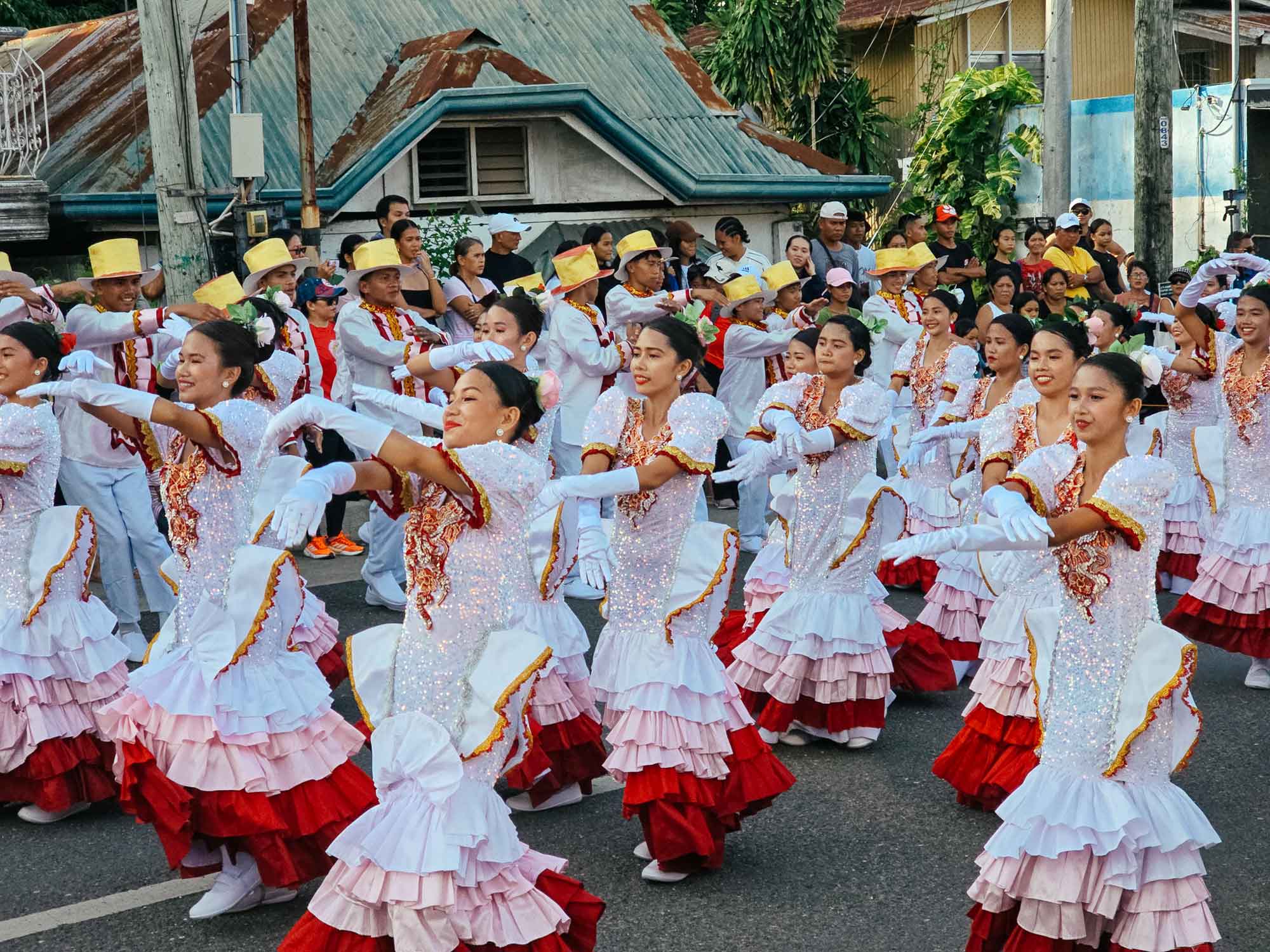
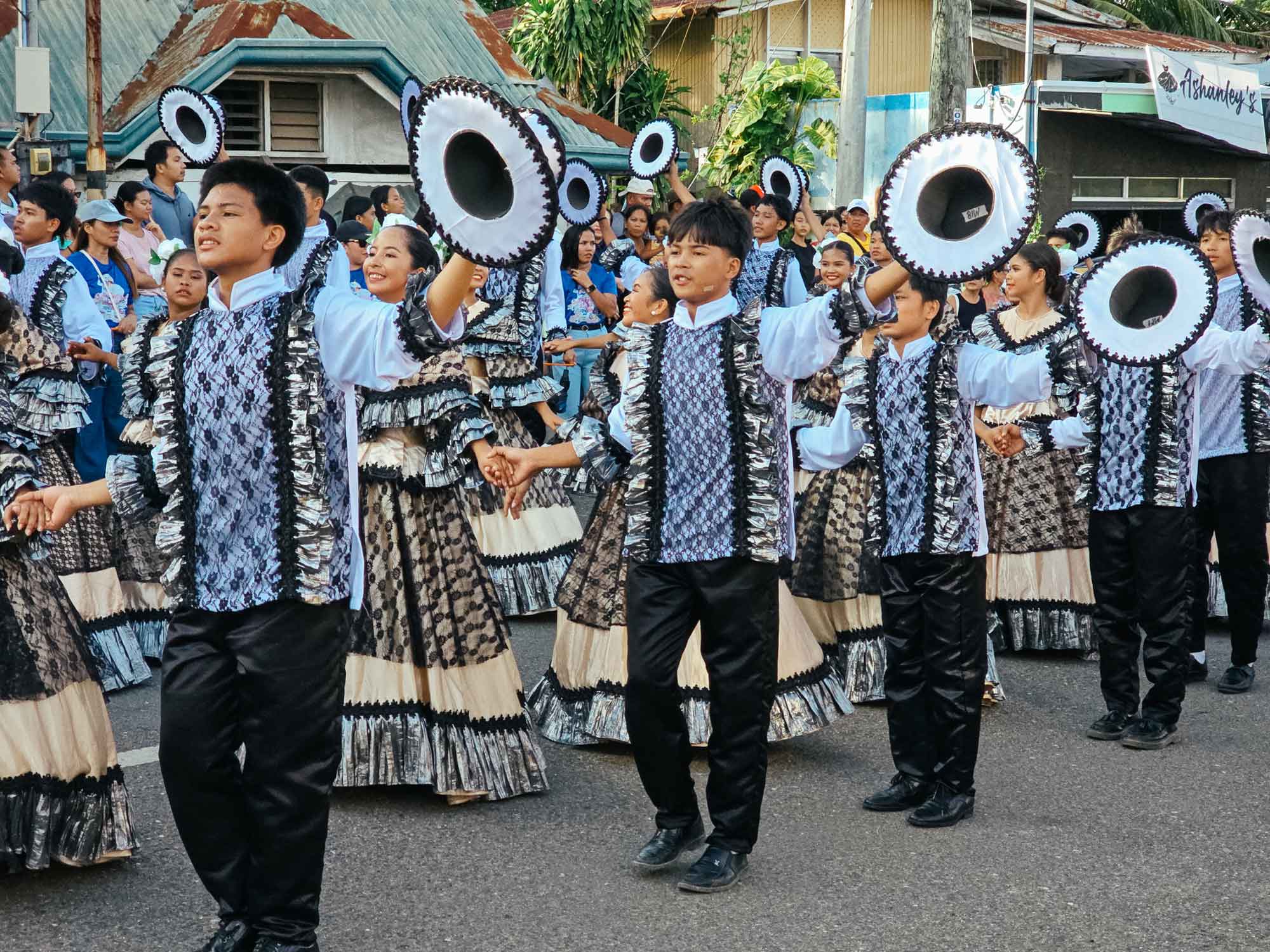
“Vesperas” – The Festive Eve Before the Fiesta
The biggest highlights are the major fiestas of the 6 municipalities, which offer a diverse program for visitors. Although the main fiesta usually takes place on just one day, the celebrations begin days in advance. The day before the fiesta is known as “Vesperas” – a time of final preparations, lively activities, and a growing sense of excitement throughout the community.
This is also why many Siquijor fiesta dates are listed over two days: the first day is dedicated to Vesperas, while the second marks the main fiesta celebration. You’ll often notice a fiesta is approaching when locals start decorating the streets with small flags and colorful ornaments.
Fiesta Day: Mass, Parades & “Bayle”
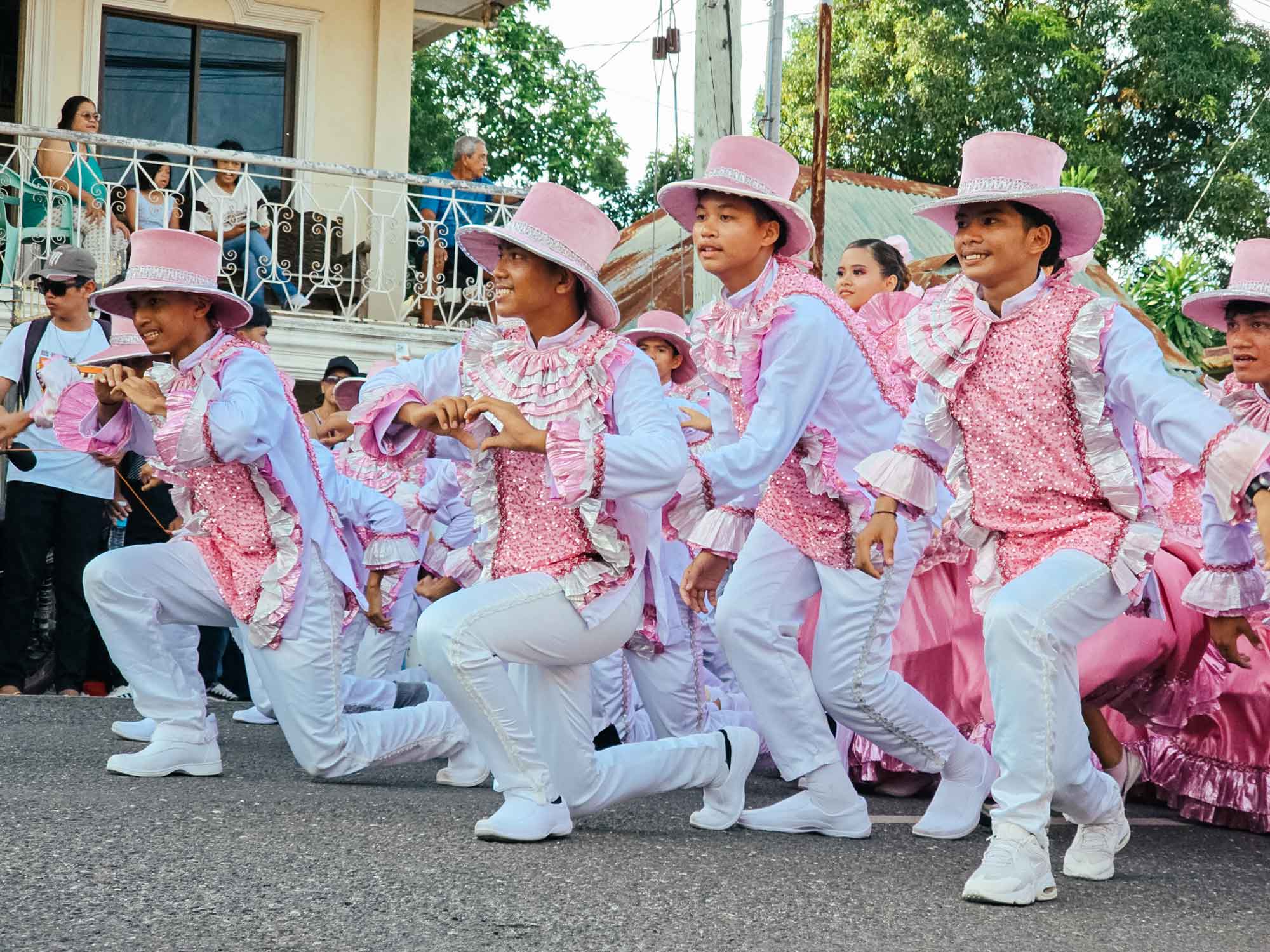
The fiesta day itself often begins with a festive church mass, followed by traditions that bring the community together: colorful street parades, dance performances, beauty pageants, sports events, and lively local markets.
In the evening, the town’s basketball court transforms into a large dance floor for the “Bayle” – a community dance party and one of the highlights of any fiesta. Here, locals and visitors of all ages come together to celebrate and enjoy the vibrant atmosphere.
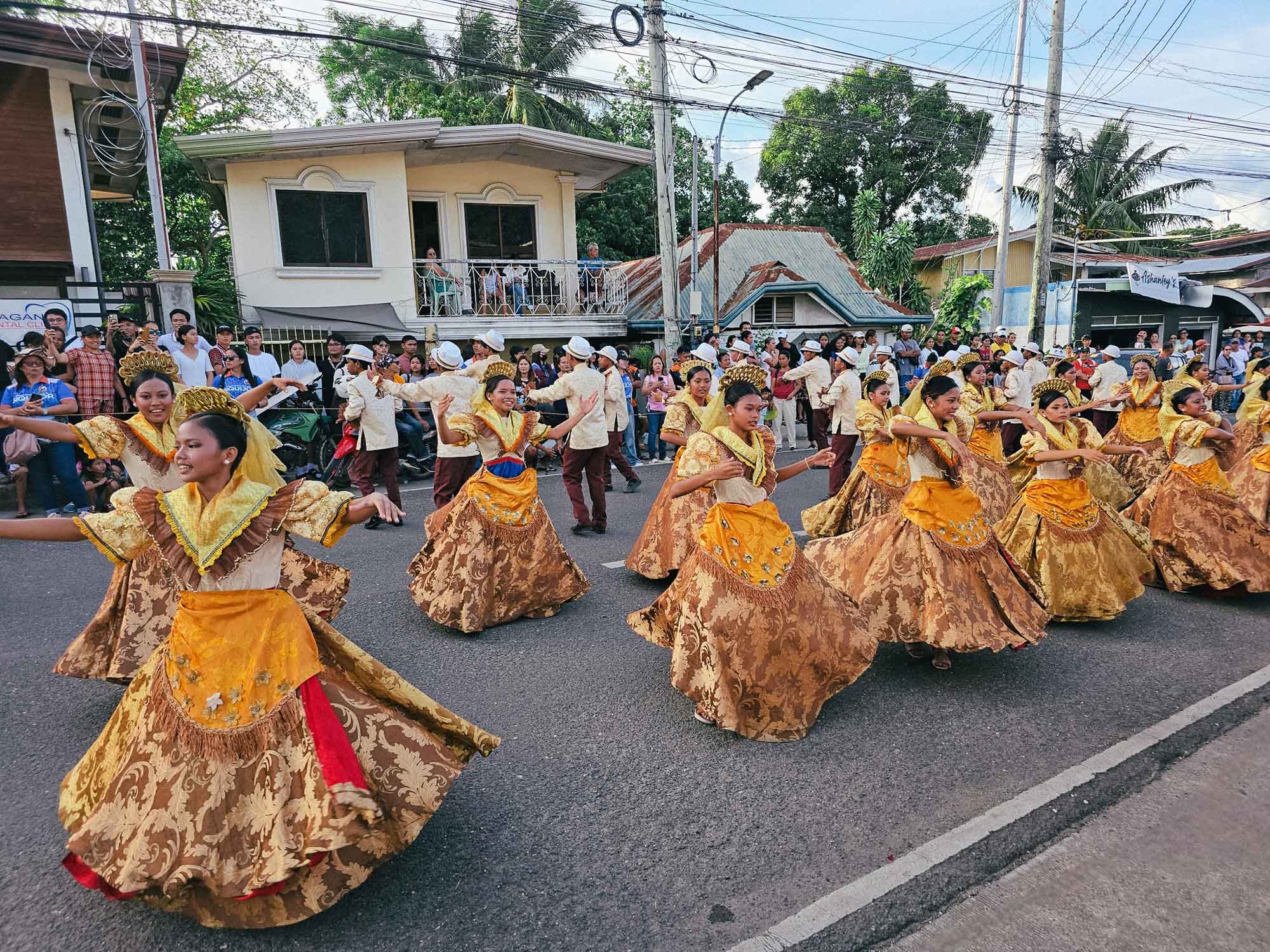
Local Stories & Cultural Identity
Each municipality has its own unique history and traditions, which are expressed during the fiesta. Many performances follow a specific theme connected to the town’s past and the way of life in that part of the island.
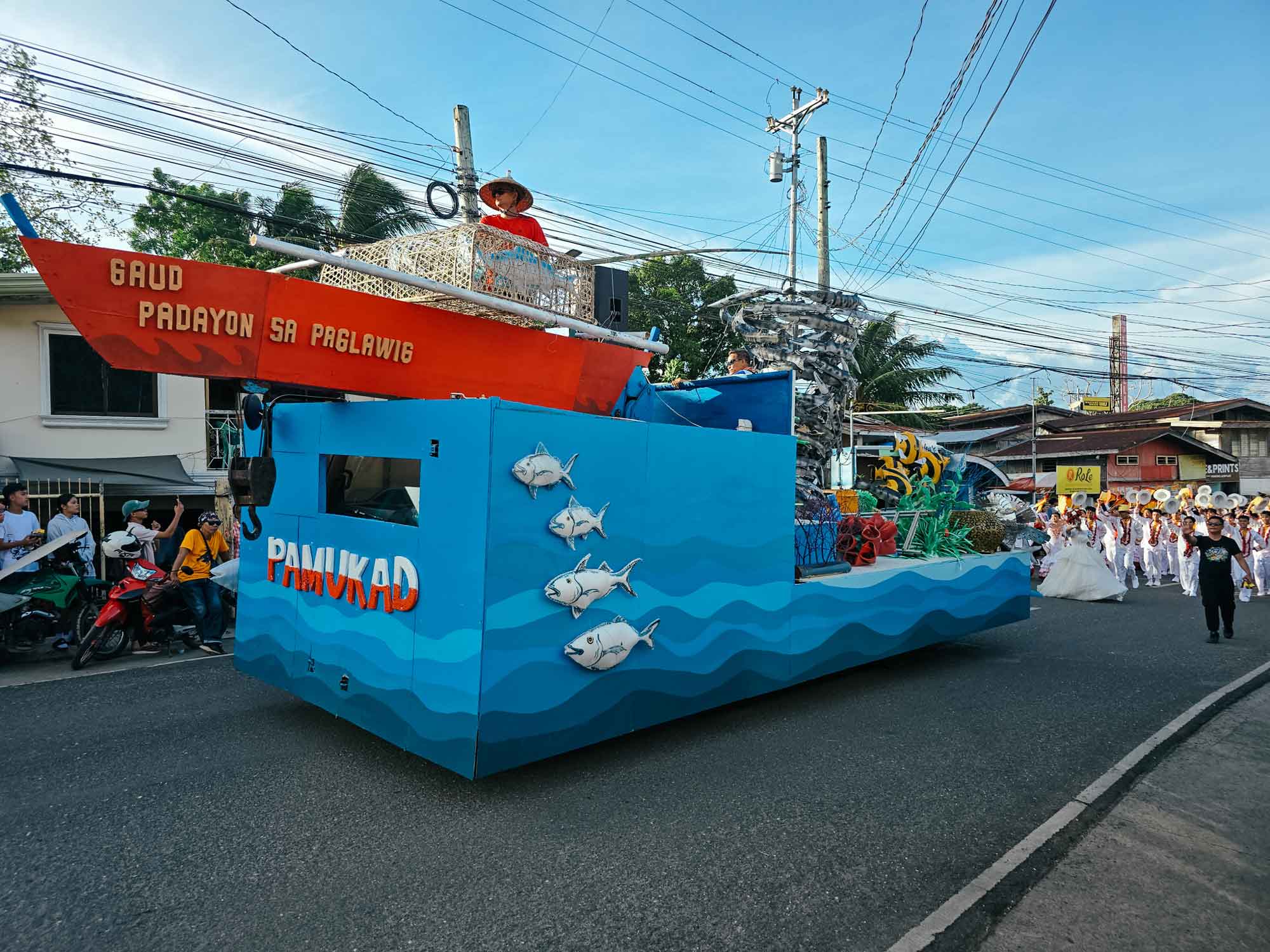
Parade floats, costumes, and decorations are often crafted using local motifs and materials to reflect what is unique and characteristic about each municipality. Every element tells a story of the region’s traditions, natural resources, and cultural heritage.
Hospitality, Food & Family Gatherings
One of the most special aspects of fiestas in Siquijor is the incredible hospitality. Locals open their homes to friends and even strangers, inviting them to enjoy generous buffet-style meals that have often been prepared for days.
It’s common to move from house to house, sharing food and conversations. Fiestas are also an important time for Filipino families, with relatives traveling from across the country – and even abroad – to celebrate together.
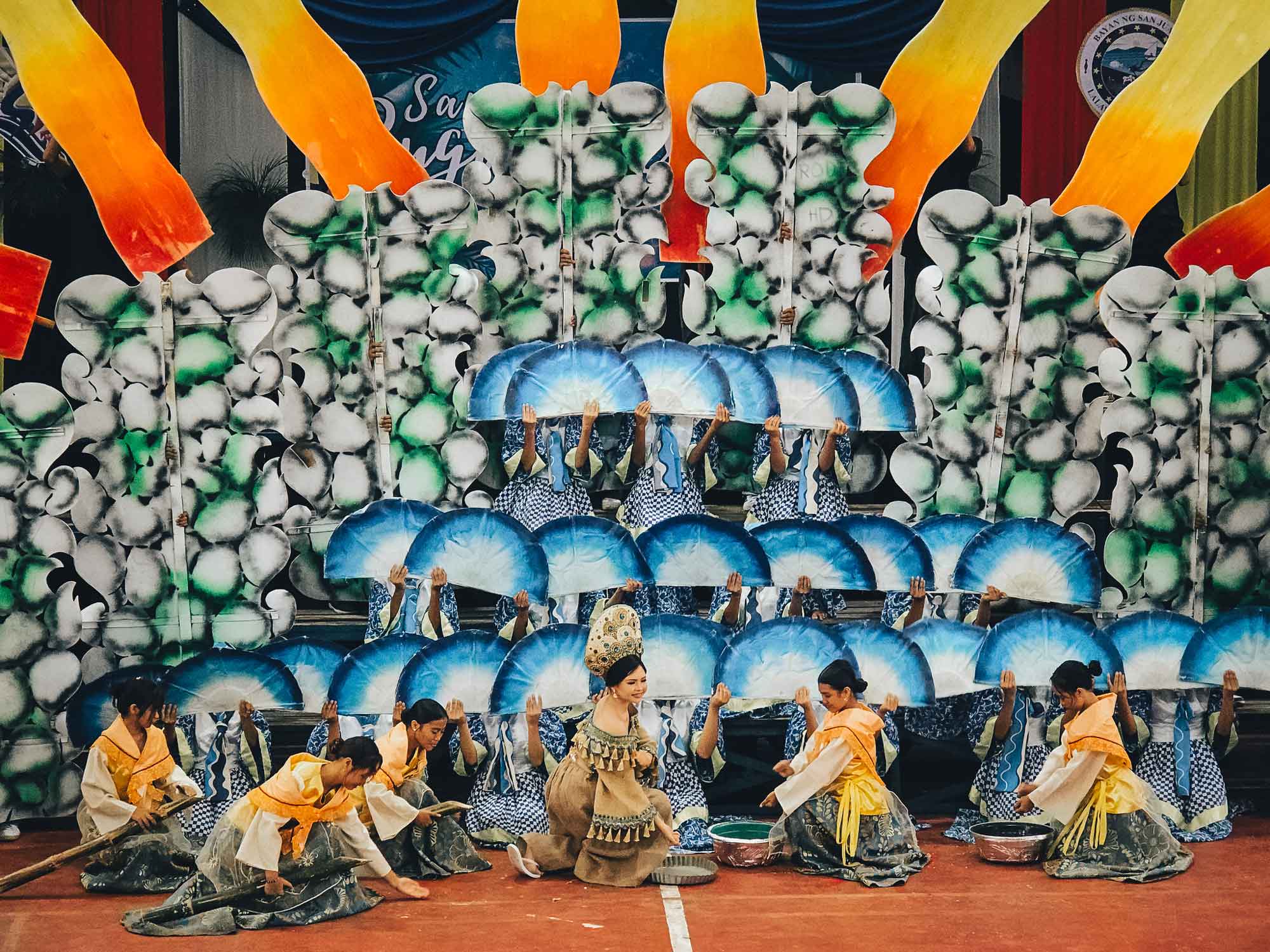
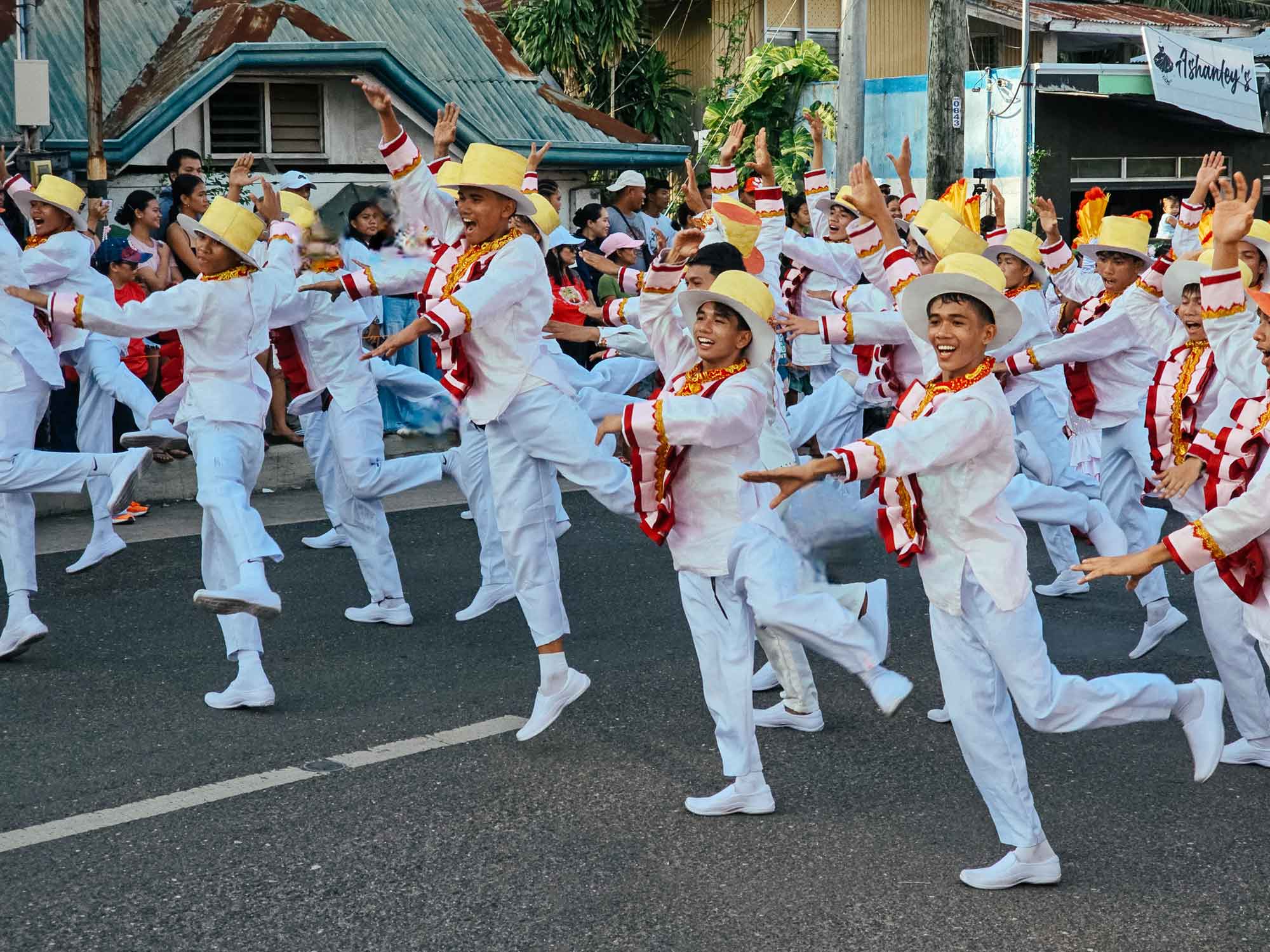
“Segunda Devoto” & Combined Barangay Fiestas
Some barangays celebrate an additional event called “Segunda Devoto,” a second, smaller fiesta held on another date. In some areas, smaller barangays combine their fiestas, creating one larger shared celebration on the same day.
The Biggest Siquijor Fiestas
The major fiestas in Siquijor are among the island’s most important cultural events and offer a deeper, more authentic glimpse into local life.
| Festival | Location | Date |
|---|---|---|
| Canoan Festival | Larena | May 2–3 |
| Saging Festival | Lazi | May 14–15 |
| Lubi Festival | Maria | May 20–21 |
| Pamukad Festival | Enrique Villanueva | July 15–16 |
| Bugwas Festival | San Juan | August 27–28 |
| Dilaab Festival | Siquijor | October 3–4 |
Canoan Festival (Larena – May 2–3)
The Canoan Festival in Larena honors Saint Vincent Ferrer and pays tribute to agricultural life. Farming is a fundamental part of daily life in Larena, shaped by hard work, patience, and a deep understanding of nature’s cycles. The festival reflects this connection to the land and the community’s rural roots.
Saging Festival (Lazi – May 14–15)
The Saging Festival in Lazi honors Saint Isidore the Farmer and highlights the importance of bananas in local life. In Lazi, bananas are far more than just a fruit – they are a staple food, widely used in local dishes, and a symbol of sustainability, creativity, and the community’s deep connection to nature.
Lubi Festival (Maria – May 20–21)
The Lubi Festival in Maria honors Saint Mary Magdalene and celebrates the coconut as the “Tree of Life.” Coconuts play an essential role in daily life in Maria, providing food, materials, and income. The festival reflects the community’s appreciation for this versatile resource and its connection to nature.
Pamukad Festival (Enrique Villanueva – July 15–16)
The Pamukad Festival honors Our Lady of Mount Carmel, the patron saint of Enrique Villanueva, and celebrates the close relationship between the people and the sea. For many families, the ocean is both a livelihood and a constant presence, representing hope, sustenance, and the realities of island life.
Bugwas Festival (San Juan – August 24–25)
The Bugwas Festival in San Juan honors Saint Augustine, the town’s patron saint, while celebrating the region’s abundant water resources. “Bugwas” means flowing water, symbolizing life and sustainability. Water plays a central role in daily life in San Juan – from natural springs and waterfalls to the surrounding sea – shaping agriculture, livelihood, and culture.
Dilaab Festival (Siquijor – October 3–4)
The Dilaab Festival is the largest fiesta on Siquijor and honors Saint Francis of Assisi, the patron saint of the municipality of Siquijor. The word “Dilaab” means “glow,” referring to the island’s nickname “Isla de Fuego” (Island of Fire), inspired by the glow of fireflies. This festival reflects a unique blend of nature, spirituality, and history, highlighting the strong connection between the people of Siquijor and their natural surroundings.
Save 10% on your Ferry Ticket on 12go.asia
until August 31!!!
Promo Code: TP10
Siquijor Fiestas – Travel Tips for Visitors
Joining a Fiesta in Siquijor as a Visitor
Even though fiestas in Siquijor are organized by local communities, visitors are always warmly welcomed. As a traveler, you’ll often be invited to join – sometimes all it takes is a smile and a bit of curiosity. Locals love sharing their food, and during fiesta season, tables are filled with traditional dishes and local specialties.
Siquijor Fiesta Schedules of Activities
Major Siquijor festivals usually publish their event schedules on Facebook pages, such as the Dilaab Festival in Siquijor or the Canoan Festival in Larena. Smaller fiestas often rely on word of mouth or social media. The easiest way to get information is simply to ask locals – they’ll be happy to help and might even invite you to join their celebration.
Busy Streets & Festive Atmosphere
During fiestas in Siquijor, streets in the hosting municipality or barangay become much busier than usual. Temporary road closures may occur during parades. If you’re heading to the port to catch a ferry, make sure to allow extra time. And if your accommodation is near the basketball court, expect loud music and celebrations during the evening Bayle. If you prefer a quieter stay, consider booking accommodation slightly outside the main fiesta areas. For the best areas and hotel recommendations, check out our complete guide on where to stay in Siquijor.
The Best Places to Stay in Siquijor
And Everything You Need to Know About Them
Complete Siquijor Fiesta Calendar 2026
Here you’ll find all Siquijor fiestas – from major municipal festivals to smaller barangay celebrations, including exact fiesta dates throughout the year.
| Municipality | Barangay | Fiesta Dates |
|---|---|---|
| Lazi | Capalasanan | January 3 |
| Larena | Candigum | January 9–10 |
| Siquijor | Pasihagon | January 14–15 (Segunda Devoto: June 17–18) |
| Siquijor | Cang-alwang | January 14–15 |
| Siquijor | Tongo | January 14–15 |
| Siquijor | Tinago | January 14–15 |
| Siquijor | Caticugan | January 14–15 (Segunda Devoto: September 13) |
| Larena | Canlasog | January 14–15 |
| Maria | Minalunan | January 15 |
| Maria | Saguing | January 15 |
| Siquijor | Cang-isad | January 23–24 |
| Siquijor | Panlautan | January 23–24 |
| Siquijor | Ibabao | January 24 |
| Lazi | Cangomantong | February 11 |
| Maria | Cabal-asan | February 11 |
| San Juan | Tag-ibo | February 11 |
| Siquijor | Cangmohao | February 11 |
| Larena | Balolang | March 18–19 |
| Enrique Villanueva | Balolong | March 18–19 |
| Maria | Liloan | March 19 |
| San Juan | Tubod | March 19 |
| San Juan | Candura | April 5 |
| San Juan | Cansayang | April 5 |
| Siquijor | Cang-Agong | April 14–15 |
| Siquijor | Calalinan | April 14–15 (Segunda Devoto: October 3–4) |
| San Juan | Paliton | April 25 |
| Larena | - | May 2–3 Canoan Festival |
| Larena | Nonoc | May 2–3 |
| Larena | Cangbagsa | May 2–3 (Segunda Devoto: January 14–15) |
| Larena | Poblacion Sur | May 2–3 |
| Larena | Poblacion Norte | May 2–3 |
| Larena | Helen | May 2–3 |
| Larena | Bagacay | May 2–3 |
| Larena | Canlambo | May 2–3 |
| Larena | Bontod | May 2–3 |
| Larena | Sabang | May 2–3 |
| Larena | Cang-allas | May 2–3 |
| Maria | Pisong B | May 3 |
| Lazi | Cang-inte | May 14–15 |
| Siquijor | Caipilan | May 14–15 |
| Siquijor | Canghunoghunog | May 14–15 |
| Lazi | - | May 14–15 Saging Festival |
| Lazi | Tigbawan | May 14–15 (Segunda Devoto: 2nd Sunday of January) |
| Lazi | Catamboan | May 14–15 (Segunda Devoto: June 27) |
| Lazi | Cangclaran | May 15 |
| Lazi | Tagmanocan | May 15 |
| Larena | Cabulihan | May 15–16 |
| San Juan | Napo | May 16 |
| Maria | - | May 23–24 Lubi Festival |
| Maria | Bogo | May 24 |
| Maria | Olang | May 24 |
| Maria | Poblacion Norte | May 24 |
| Maria | Poblacion Sur | May 24 |
| Maria | Looc | May 24 |
| Maria | Cantaroc A | May 24 |
| Maria | Cantaroc B | May 24 |
| Maria | Sawang | May 24 |
| Maria | Candaping A | May 24 |
| Maria | Cangtugbas | May 24 |
| Maria | Pisong A | May 24 |
| Siquijor | Cantabon | June 12–13 |
| Siquijor | San Antonio | June 12–13 |
| Lazi | Gabayan | June 24 |
| San Juan | Poblacion | June 24 |
| Larena | Cangmalalag | June 29 |
| Larena | Sandugan | June 29 |
| Enrique Villanueva | - | July 15–16 Pamukad Festival |
| Enrique Villanueva | Lomangcapan | July 15–16 |
| Enrique Villanueva | Tulapos | July 15–16 |
| Enrique Villanueva | Poblacion | July 15–16 |
| Enrique Villanueva | Bolot | July 15–16 |
| Enrique Villanueva | Bino-ongan | July 15–16 |
| Enrique Villanueva | Camogao | July 15–16 |
| Enrique Villanueva | Parian | July 15–16 |
| Enrique Villanueva | Olave | July 15–16 |
| Enrique Villanueva | Cangmangki | July 15–16 |
| Enrique Villanueva | Lotloton | July 15–16 |
| Maria | Bonga | August 15 |
| Maria | Licoan | August 15 |
| Enrique Villanueva | Bitaug | August 15–16 |
| Siquijor | Sabang | August 15–16 |
| Siquijor | Luyang | August 15–16 |
| Siquijor | Banban | August 15–16 |
| Siquijor | Pili | August 15–16 |
| Siquijor | Olo | August 15–16 (Segunda Devoto: May 13) |
| Siquijor | Tacloban | August 15–16 |
| San Juan | - | August 27–28 Bugwas Festival |
| San Juan | Solangon | August 28 (Segunda Devoto: October 7) |
| San Juan | Lala-o | August 28 (Segunda Devoto: May 3) |
| San Juan | Poblacion | August 28 (Segunda Devoto: June 24) |
| San Juan | Maite | August 28 (Segunda Devoto: December 8) |
| San Juan | Can-asagan | August 28 |
| San Juan | Cangmunag | September 8 |
| Siquijor | Cang-atuyom | September 9–10 |
| Siquijor | Cang-asa | September 9–10 |
| Siquijor | Lambojon | September 9–10 |
| Lazi | Nagerong | September 10 |
| Lazi | Tignao | September 20 |
| Siquijor | Luzong | September 26 |
| Siquijor | Cangmatnog | September 26 |
| Siquijor | Cang-adieng | September 26–27 |
| Siquijor | Ponong | September 29 |
| San Juan | Timbaon | September 29 |
| Siquijor | - | October 3–4 Dilaab Festival |
| Siquijor | Pulangyuta | October 3–4 |
| Siquijor | Tacdog | October 3–4 |
| Siquijor | Cangmohao | October 3–4 |
| Siquijor | Songculan | October 3–4 |
| Siquijor | Bolos | October 3–4 |
| Siquijor | Calalinan | October 3–4 |
| Siquijor | Canal | October 3–4 |
| Siquijor | Poblacion | October 3–4 |
| Siquijor | Pangi | October 3–4 |
| Siquijor | Candanay Sur | October 3–4 |
| Siquijor | Candanay Norte | October 3–4 |
| Siquijor | Caitican | October 3–4 |
| Siquijor | Panlautan | October 3–4 |
| Siquijor | Dumanhog | October 3–4 |
| Lazi | Talayong | October 7 |
| Lazi | Lower Cabangcalan | October 7 |
| Enrique Villanueva | Mananao | October 12 |
| Larena | Ponong | October 11–12 |
| San Juan | Catulayan | October 13 |
| Lazi | Kinamandagan | October 20 |
| Maria | Logucan | October 20 |
| Siquijor | Tebjong | 2nd Sunday in Nov. |
| Lazi | Po-o | November 17 |
| Lazi | Kimba | November 20 |
| Maria | Nabutay | November 25 |
| Larena | Cang-apa | November 1 (Segunda Devoto: June 13) |
| Larena | Calunasan | November 27–28 |
| Larena | Bintangan | November 27–28 |
| Larena | Basac | November 27–28 |
| Larena | Catamboan | November 27–28 |
| Lazi | Ytaya | December 4 |
| Lazi | Upper Cabangcalan | December 4 |
| Lazi | Campalanas | December 4 (Segunda Devoto: June 10) |
| Lazi | Simacolong | December 8 |
| Maria | Calunasan | December 8 |
| Maria | Candaping B | December 12 |
| Siquijor | Tambisan | December 17–18 |
| San Juan | Tambisan | December 18 |

