Siquijor, the Mystical Island
Myths and Legends of Witches and Healers in Siquijor: A Mystical Journey into the Present
Siquijor – an island in the southern Philippines, known to travelers for its natural beauty, tranquil beaches, crystal-clear waters, and laid-back vibe. But behind the island’s idyllic scenery lies a story that is as fascinating as it is mysterious – a tale that’s not so much documented in written records, but passed down through oral traditions. These stories speak of ancient myths surrounding witchcraft, healing arts, and spiritual rituals. Due to its historical ties to mystical practices and shamanism, Siquijor is still often called the “Island of Healers” or the “Witch Island.” This seemingly paradoxical blend of evil witches and benevolent healers is deeply ingrained in the local culture, and the island continues to play a significant role in the cultural and spiritual landscape of the Philippines today.
Even today, healers and shamans live on the island, skilled in the art of natural medicine and magical rituals. These spiritual practices, passed down from generation to generation, add to Siquijor’s mystical reputation and have a profound impact on the lives of the locals. But what’s really behind these myths and legends? Who are the witches and healers of Siquijor, and what role do they play in modern times? This article takes a closer look at the deep roots of the island’s mystical traditions, the current practices of its healers and shamans, and the relationship between the locals and the tourists who are drawn to the mysterious stories and rituals.
Legends About the Origin of Siquijor
According to the legend, a massive limestone rock once rose from the sea, shrouded in mist and lightning. As the mist cleared, the island of Siquijor appeared in all its beauty, and the first settlers who lived there came to be known as the Siquijodnons – a name that locals still use to this day. This story might not be as far from reality as it seems, because Siquijor is actually the result of long geological processes beneath the sea. Even today, farmers in the highlands find shells in their fields, and the island is rich in coral stone, suggesting that it once rose from the ocean floor.
"La Isla del Fuego" - The Island of Fire
Before the Spanish colonization, Siquijor was known as Katugusan, named after the Tugas (Molave trees) that can be found all over the island. In 1565, Spanish explorers Estéban Rodriguez and Juan Aguirre discovered the island and named it „Isla del Fuego“ (“Island of Fire”) due to the abundance of fireflies that lit up the night. This natural phenomenon (which is now quite rare) was probably the reason Siquijor first gained its reputation as being enchanted, and why even locals from neighboring islands once feared coming here.
The Name of the Island Siquijor
As for the island’s current name, according to local folklore, the Spanish explorers were greeted by a king named Kihod (about whom practically nothing is known), who introduced himself as “si Kihod”. However, the Spaniards mistakenly thought he was giving them the name of the island. They found “si Kihod” hard to pronounce, so they adapted the letters to fit the Spanish language. In Spanish, the letter k isn’t used, and the letter h is always silent, so the hard h sound in Kihod was replaced with a j. The end result: Siquijor.
But that’s just one possible story behind the island’s name. Another explanation points to the Bisaya word quidjod (“the tide recedes”). A third theory suggests that the Spaniards asked the locals how best to reach Siquijor, and the response was “Sequor” (“Follow the waves”), which was misinterpreted and eventually turned into the name Siquijor. Which theory is correct may never be known.
The Roots of Belief in Witches and Healers -
Historical Traditions from the Past
The belief in witches and healers on Siquijor has deep historical roots, making the island a mystical place where dark forces and healing magic are mysteriously intertwined. Even before Spanish colonization, Siquijor was revered as the home of witches and shamans – but also feared. The island’s native population was considered particularly connected to the spiritual world. The Tagbuanas, the indigenous people of the island, firmly believed in the existence of spirits, nature beings, and higher powers that influenced human life. Witches, shamans, and healers were the guardians of herbal knowledge, magical rituals, and spiritual practices that could heal diseases or predict the future.
The First Historical Mention of Witches on Siquijor
The first historically documented source that mentions witches in the Siquijor region is the significant work „Sucesos de Islas Filipinas“ (Events in the Philippine Islands), written in 1609 by Spanish judge and historian Antonio de Morga. His observation: “Herb collectors and witches are widespread among these natives, but they are not punished or forbidden as long as they do no particular harm. However, this was rarely able to be confirmed or proven.” He also laments the absence of religious sites, temples, and priests. Instead, he describes experienced witches and sorcerers – old men and women – who lead the rest of the people astray with lies. They use various remedies and simple methods to heal the sick and predict the future.
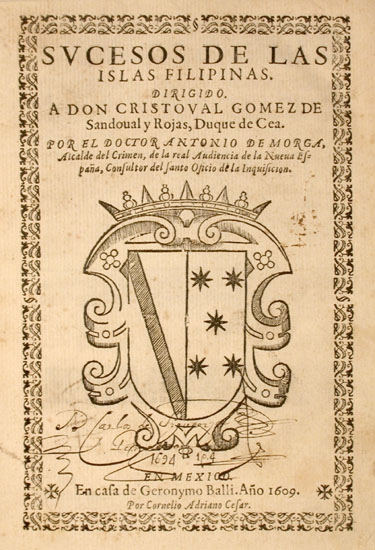
„Sucesos de Islas Filipinas“ from 1609 is the first recorded mention of witches in the Siquijor region.
Legends of Witches in Philippine Mythology
It was believed that witches and healers possessed the ability to connect with both nature’s spirits and supernatural forces. In the old stories, these mystical beings are often described as preparing healing tinctures and casting spells, either to lift curses or to bring them upon others. And many people still follow this belief today.
What exactly is a Witch?
It’s important to note that the term “witch” is a Western or European concept. It’s a label that was applied to the people of Siquijor when the Spaniards arrived and were horrified by the island’s “godlessness.” In Philippine mythology, the image of a witch differs greatly from Western ideas. There are numerous region-specific names for sorcerers and magical beings—many of which carry negative connotations. In foreign-language sources, they’re often grouped together under the Westernized term “witch.” What these different beings have in common is that they practice „Kulam“, which can be translated as “magic” or “witchcraft.”
The Mambabarang
A Mambabarang is a Bisaya version of a magician or witch. According to legend, Mambabarangs appear to be ordinary people who are skilled in black magic. They use insects and spirits to enter the bodies of those they wish to curse. They keep swarms of insects in jars or bamboo tubes, and once they curse a victim, they release the insects. These creatures then haunt the victim, bringing about the intended effects, which can range from illness to death.
The Aswang
An Aswang is another Bisaya term for a creature that could be considered a type of “witch,” though Aswang is a broad term used for various evil beings in Philippine folklore. Typically, they are described as vampire-like supernatural creatures that can appear human but possess the power of shape-shifting. They can take almost any form, often being portrayed as human-animal hybrids. In the Philippines, the Aswang is considered the most feared mythical creature, as they feed on humans to survive, and their motives are purely evil.
The Mangkukulam
Another figure that can be classified as a classic witch is the Mangkukulam, which literally translates to “a practitioner of Kulam” (magic or witchcraft). Although Mangkukulam is a term from Tagalog, it is used across the entire Philippines. Mangkukulams are known for sticking needles into voodoo dolls to cast spells on those they seek revenge on. They also prepare various „barang“ (magical potions) that curse anyone who drinks them.
Legends of Healers on Siquijor
Siquijor is not only known for its dark magic but also for its healing traditions. The „Mananambal“, the island’s traditional medicine men, play a central role in Siquijor’s mystical culture. The Mananambal practice a form of naturopathy based on the healing arts of the plants and herbs that grow on the island. They are also renowned for their ability to drive away negative energies and evil spirits, as well as for healing both the body and the mind. These practices are often referred to as “white magic,” as they are intended for the healing and well-being of others.
Another important term in this tradition is “Albularya”, derived from the Spanish word herbolario (herb specialist), which generally means “healer.” However, this term is a broad one, encompassing medicine men, witch doctors, and folk healers. It is not a term from any indigenous Philippine language, but rather a product of the Spanish colonial era. The Spanish used this term to refer to various groups of healers. Some Albularya are also said to practice black magic alongside folk medicine, casting curses on people. This contributes to the difficulty in historical accounts to clearly distinguish whether a healer or a witch was at work. Moreover, this blurring of lines often leads to accusations that all those who deal with healing and the supernatural practice black magic.
The blending of healing arts and magical practices led to the Albularya being both respected and feared. On one hand, they were valued for their ability to use herbs, medicinal plants, and traditional treatments to relieve or even cure illnesses. On the other hand, there were frequent legends that some Albularya tapped into dark forces to cause harm, whether through curses, enchantments, or the use of black magic. This dual role as both healers and potential sorcerers added to the mystical aura surrounding the Albularya and made them ambivalent figures on Siquijor and throughout the Philippines.
Especially in rural Siquijor, where medical care was often difficult to access, trust in the Albularya’s abilities was even stronger. They were seen not just as healers but also as spiritual guides, believed to be able to communicate with the spirits of ancestors or other supernatural beings. These traditions were passed down through generations and became an integral part of the islanders’ lives.
However, due to the intertwining of healing arts and magic, Siquijor also became a frequent target of mistrust and fear, shaping the island’s history up to the present day. Many people from neighboring islands and regions avoided Siquijor for a long time, viewing it as an “enchanted” land. Even the Spanish colonizers, who sought to convert the island to Christianity, had to contend with these deeply rooted beliefs, which have persisted to this day.
The Philippines converted to Catholicism in 1521, but missionaries did not arrive on Siquijor until the 17th century, likely deterred by rumors of witchcraft. Shamanic traditions were deeply rooted in the island’s culture, yet over time, the two belief systems blended, allowing shamanic beliefs to coexist alongside Christianity.
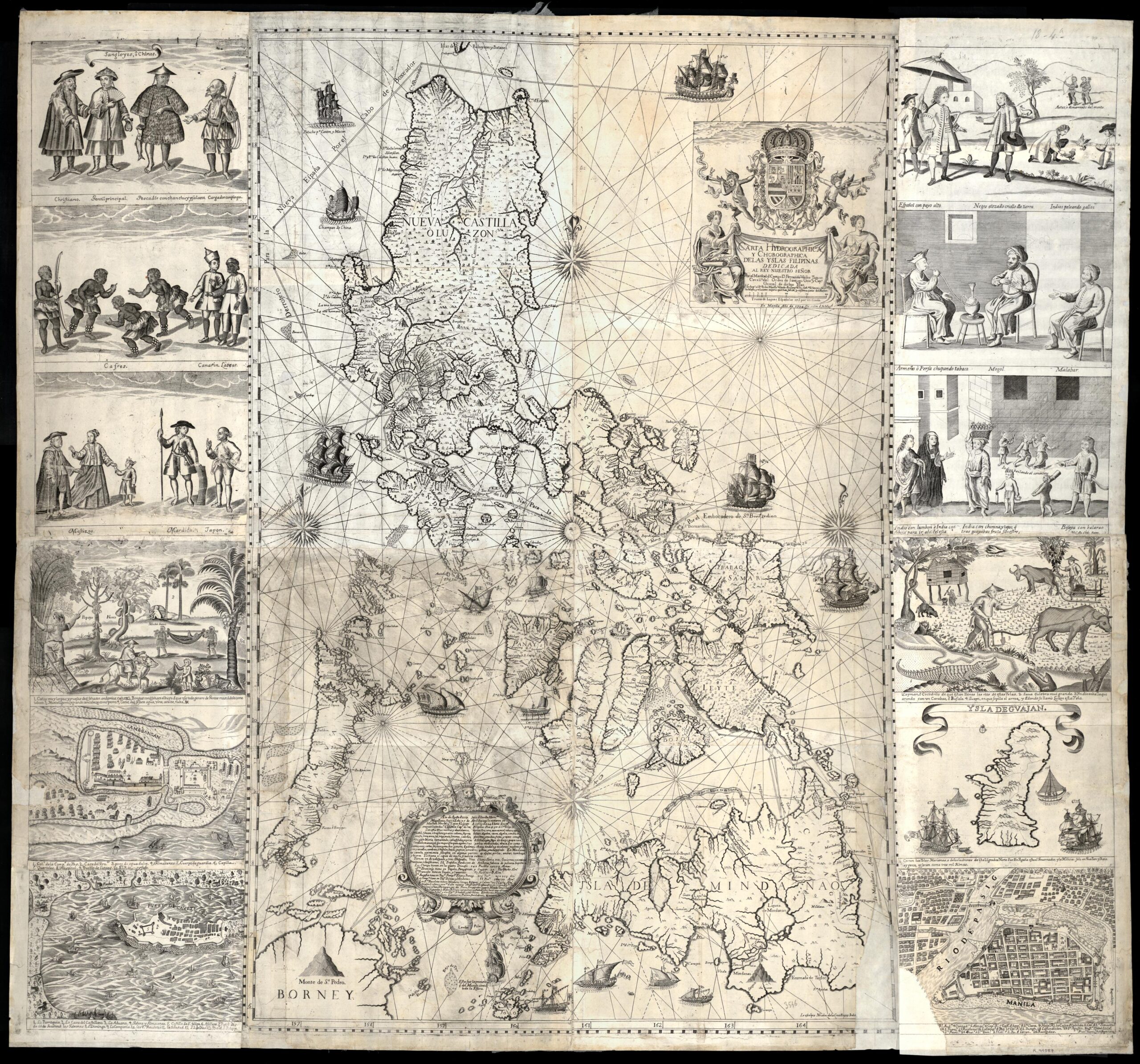
The First Map of the Philippines from 1734.
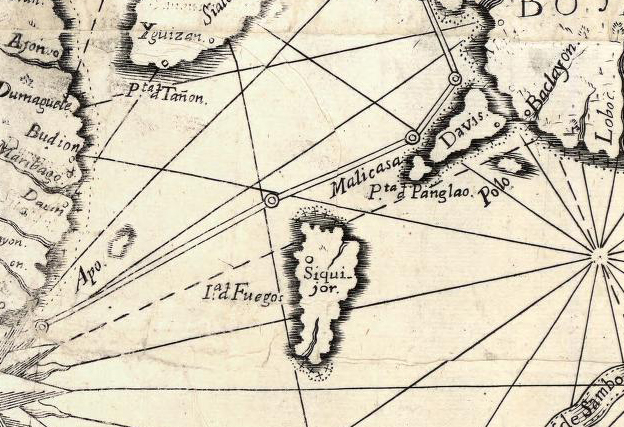
Siquijor appears in a very different shape in this depiction.
Siquijor - The Healing Island Today
The stories of Mambabarangs, Aswangs, and Mangkukulams are still told on Siquijor today. Magic continues to play a central role in the island’s folklore, whether in everyday life or during special moments. Albularya or healers have always been individuals with great wisdom in the use of plants, symbols, and spiritual energies. These healers have not only preserved traditional healing methods but have also adapted their practices to the modern age. In recent decades, many have begun to modernize their methods by combining their knowledge of herbal medicine with Western medicine and alternative healing approaches. Yet, spiritual and magical rituals remain at the core of their work. While the practices of the Albularya and Mambabarang have evolved over the years, their significance remains unchanged. Healers on Siquijor are still in high demand, especially among locals, who often turn to natural remedies before seeking modern medical care.
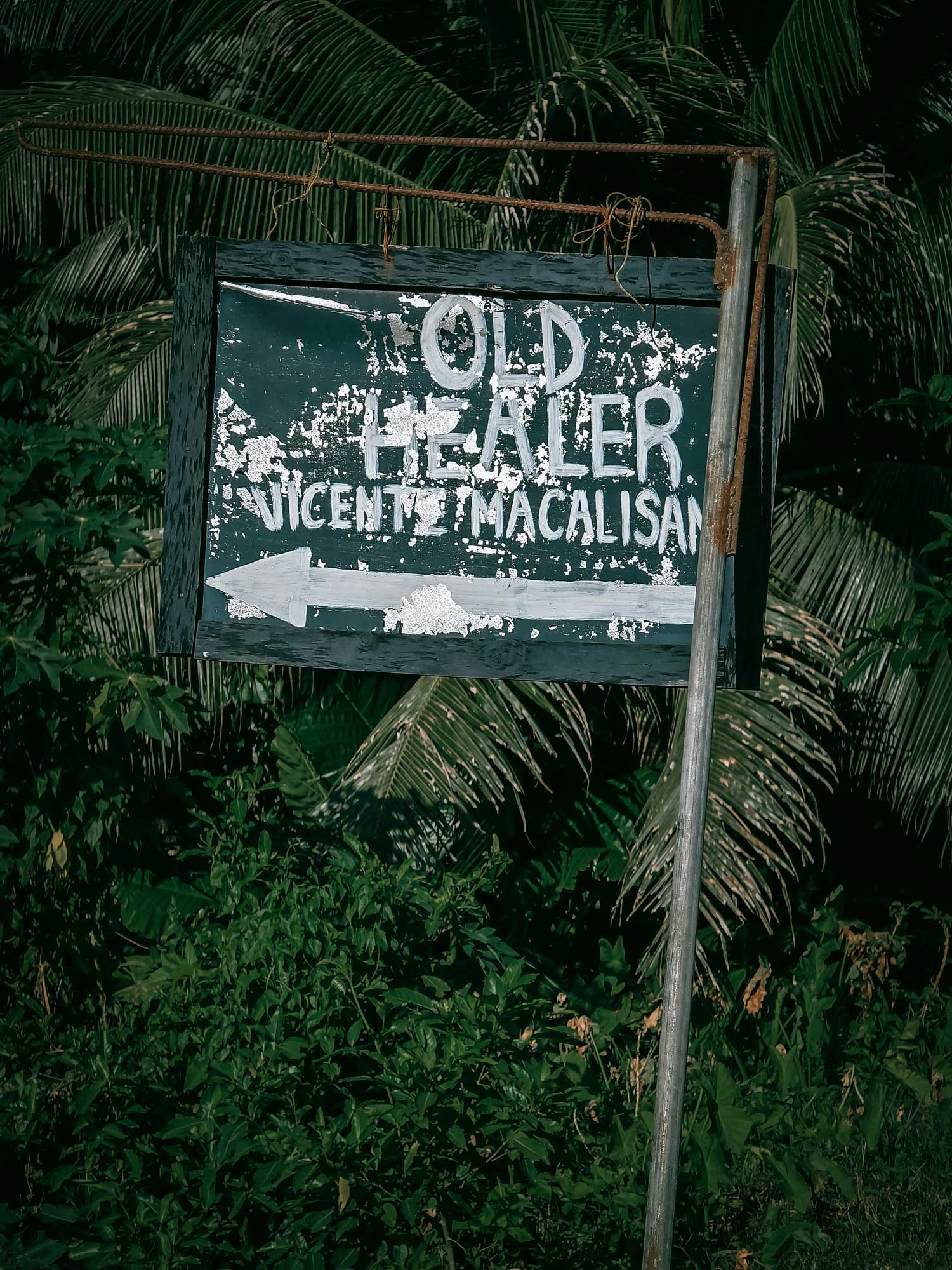
Today, the rituals of healers on Siquijor are diverse. One popular practice is the “bolo-bolo” ritual. This ritual involves a glass filled with fresh water, a straw, and one or two magical stones placed in the glass. As the healer moves the glass over the patient, they blow air into the water; the stones are believed to drive away curses and spirits, causing the water to become cloudy and sometimes revealing mystical objects. During the healing process, a needle might appear (possibly caused by a voodoo curse from a doll) or various objects that represent burdens on the spirit or soul. This process continues until the water clears up, which is considered a sign of restored health. Other practices include communicating with ancestors, known as “Tigi”, to heal inherited illnesses, as well as palm reading and fortune-telling. Even today, it is still possible to visit a healer on Siquijor to lift an existing curse or even to curse someone else. However, these rituals require that something harmful has first been done to you, as the curse to be cast is a response to a previous wrongdoing.
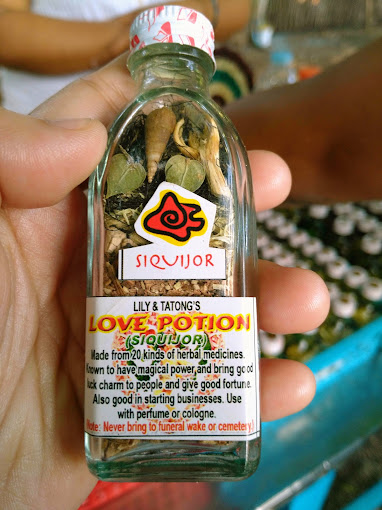
Most of the healers on Siquijor today live in the mountains of the village of San Antonio. For their rituals, they usually don’t set fixed prices but rather expect a voluntary tip (except for the magic potions). Even today, it’s possible to buy magic potions on Siquijor. One of the most popular is the love potion called Lumay (Bisaya/Cebuano) or Guyama (Tagalog), which is believed to make the person who drinks it fall in love with you.
In addition, there are many other potions with different purposes, such as tawa-tawa (laughter), sumbalik (return), tulay (connection), and tulog-tulog (rest). The ingredients for the most powerful elixirs are prepared on a special day each year: Black Saturday (the day after Good Friday, when Christ was laid in his tomb). In the Philippines, this day is observed as a day of mourning, which is why it’s called “black.” During this time, healers from all over the Philippines gather once a year on Siquijor for the Healing Festival, where they practice their ancient rituals together, celebrate, and offer them to visitors.
The Folk Healing Festival was launched in 2010 by then-Governor Orlando Fua Jr. to transform the island’s negative image from a ‘Witch Island.’ The festival aimed to promote tourism and preserve the heritage of traditional healing practices. As a result, Siquijor became known as ‘the Healing Island.’